South Florida offers an extraordinary range of diving experiences, and two of the most talked-about are also two of the most different from each other. Blue Heron Bridge, tucked inside Phil Foster Park in Riviera Beach, is a shallow shore dive that is famous for its incredible density of unusual marine life. Jupiter’s offshore drift dives, powered by the Gulf Stream, are famous for big animals, dramatic reef ledges, and the effortless thrill of flying through the water on a current. Both are exceptional. But they are genuinely different experiences suited to different divers, different moods, and different goals.
At Reef Diver Adventures, we guide dives at both locations regularly, and we are often asked which one someone should do first. The honest answer is that it depends. Here is a breakdown of both experiences to help you figure out which one is right for you.
Blue Heron Bridge: The World in 20 Feet of Water
Blue Heron Bridge, located at Phil Foster Park at the southern end of the Lake Worth Lagoon, has been rated the number one shore dive in the United States. That ranking is not based on dramatic scenery or big animal encounters. It is based on the sheer diversity and density of unusual marine life packed into a shallow, calm, accessible site.
The maximum depth here is about 20 feet. Most of the interesting action happens in 8 to 15 feet of water. You enter from the beach, wade out past the swim zone, submerge, and suddenly find yourself in a world that bears no resemblance to the open Atlantic reef. The seafloor is a mix of sand, silt, and artificial structure that acts as a nursery for hundreds of species that you simply will not find anywhere else in South Florida.
Seahorses cling to blades of seagrass. Frogfish sit motionless in perfect camouflage, revealing themselves only to eyes that know what to look for. Octopus ripple with color changes as they move across the bottom. Mimic octopus perform their remarkable impersonations in the open. Nudibranchs in colors you would not believe exist in nature crawl across every surface. Batfish waddle along the bottom on their modified fins. Flying gurnards spread their spectacular wing-like pectoral fins and cruise just above the sand.
Experienced underwater photographers call Blue Heron Bridge a macro paradise. Others compare it to Lembeh Strait in Indonesia, one of the world’s most celebrated critter diving destinations. The comparison is not an exaggeration.
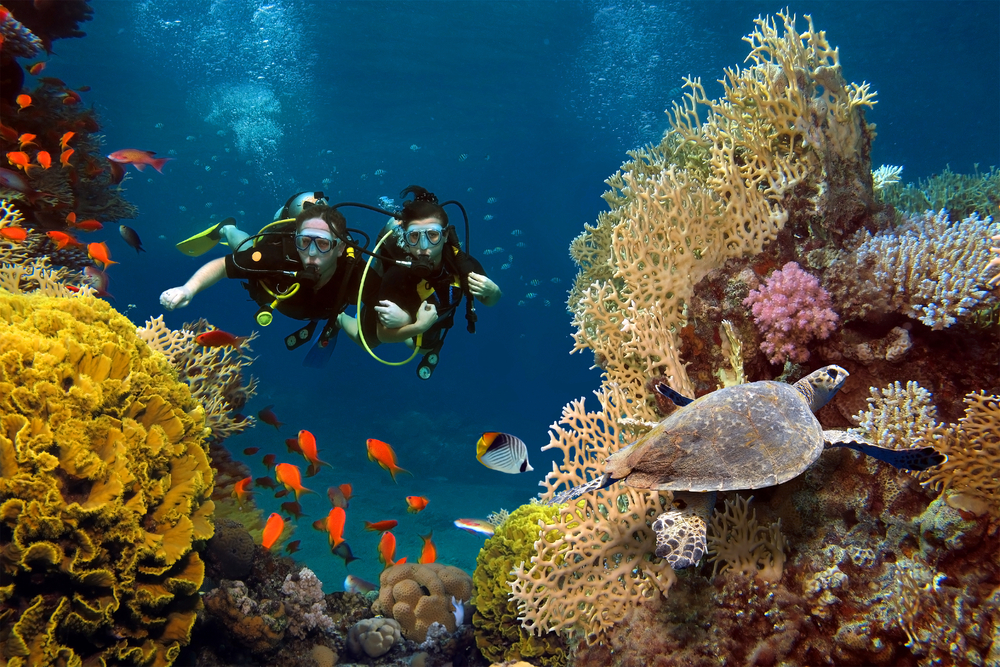
Blue Heron Bridge is ideal for divers who love finding small, unusual, and beautifully camouflaged marine life. It is perfect for underwater photographers. It is excellent for newer divers because the shallow depth means long bottom times, calm conditions, and a forgiving environment to build confidence. And it is tide-dependent, meaning you need to plan your dive around high slack tide for the best visibility and calmest conditions.
Jupiter Drift Diving: Big Water, Big Animals, Big Thrills
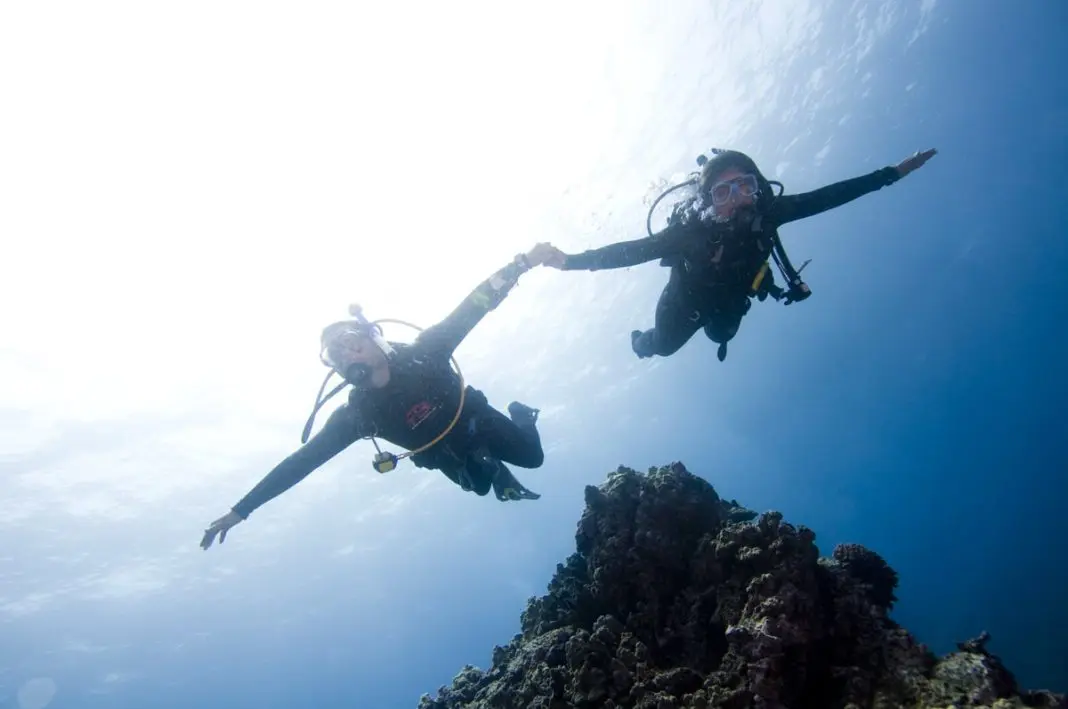
Jupiter’s offshore drift diving is a completely different category of experience. Here, you board a boat, travel out to the reef, and descend into the deep blue of the Gulf Stream. The water is a remarkable shade of blue that divers around the area have started calling Jupiter Blue. Visibility stretches to 60, 80, sometimes 100 feet. And the current, moving gently but steadily northward, picks you up and carries you along the reef in a sensation that really does feel like flying.
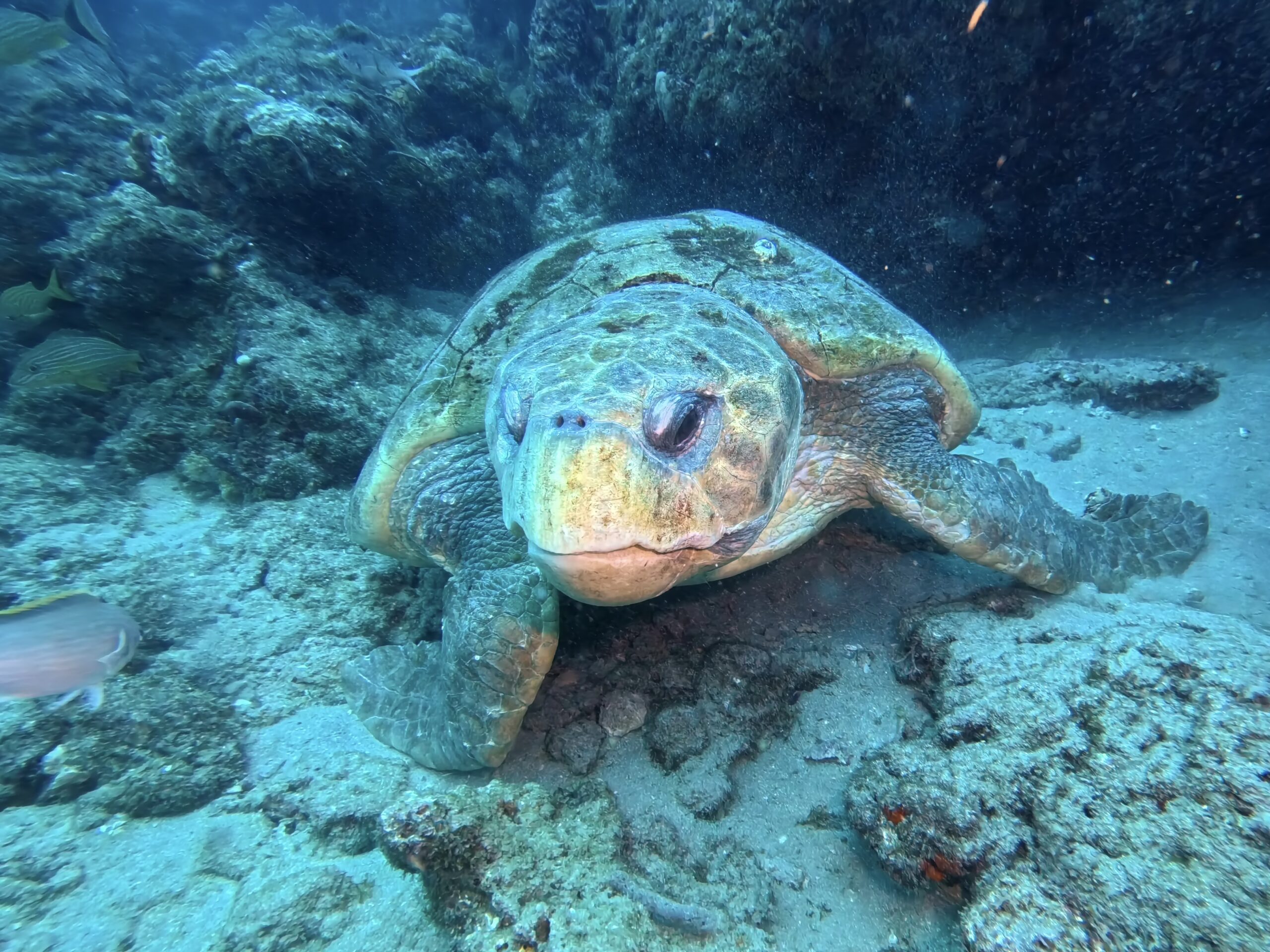
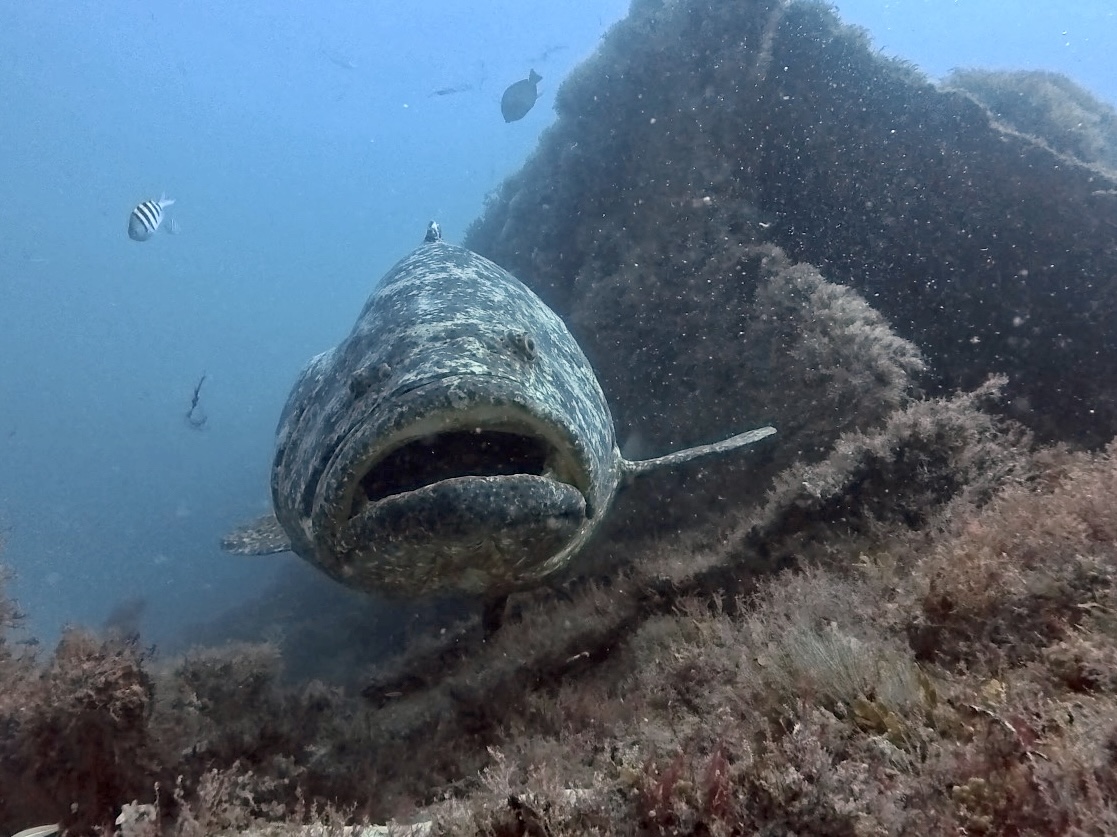
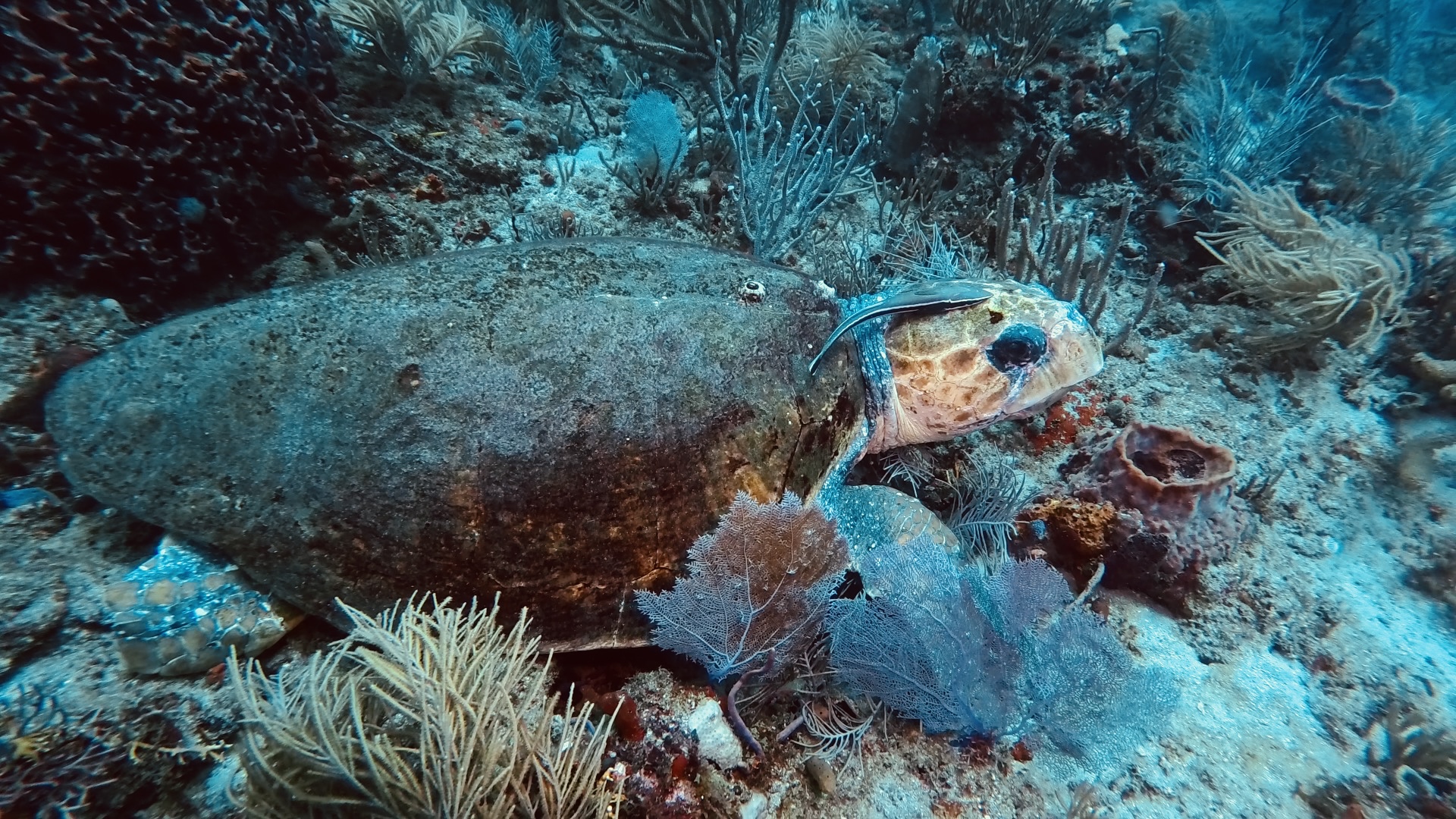
The marine life at Jupiter operates on a different scale. This is where you encounter Caribbean reef sharks that greet you at the top of the descent, often approaching within arm’s length. Where Goliath Grouper the size of sofas hover in the shadows of the ledge. Where sea turtles, including loggerheads, greens, and hawksbills, cruise past with barely a glance in your direction. Where spotted eagle rays appear suddenly from the blue water and glide silently overhead.
The dive sites themselves have character. Tunnels is a reef ledge with actual swim-through formations and the reputation as the Mecca of Jupiter diving. Area 51 is a fractured reef wall draped in crevices that hide eels, frogfish, and a rotating cast of reef sharks. The Wreck Trek is three wrecks within drift distance of each other, all in about 90 feet of water, all absolutely teeming with life.
Jupiter drift diving is best suited for Advanced Open Water certified divers or above, due to the depths involved and the presence of current. It is ideal for divers who want big encounters, dramatic scenery, and the effortless thrill of moving through clear open water with large marine life.
So Which Should You Choose?
If you are an Open Water certified diver who loves detail, patience, and the thrill of finding something extraordinary in a small package, start with Blue Heron Bridge. If you are an Advanced certified diver who wants big animals, big water, and the rush of drift diving, start with Jupiter.
And if you cannot decide? Many of our clients combine both in a single day. A morning dive at Blue Heron Bridge at high tide followed by an afternoon Jupiter drift dive makes for one of the most varied and memorable days of diving you can have anywhere in South Florida.
Reach out to Reef Diver Adventures and we will help you plan exactly the right experience for where you are in your diving journey.